


Kosovo
Discover this Balkan country of beautiful mountains, protected monasteries, and friendly people, ideal for experiencing an authentic and safe cultural experience today.
Quick Facts
- Capital
- Pristina
- Language
- Albanian
- Serbian, Turkish
- Currency
- Euro
- Best time to visit
- From May to September, with pleasant weather to explore mountains and cities.
- Budget per day
- $25 - $60 per day
- Climate
- Continental climate with hot summers and cold, snowy winters; mountain areas are cool in summer.
- Connectivity
- good
- It is very easy to purchase local SIM cards or eSIMs at airports and specialized stores.
- Electricity
- Type C/F (230V)
- Local transport
- acceptable
- Card usage
- cash is used more
- Tipping
- optional
🌎 Introduction
In the heart of the Balkans, where the peaks of the Dinaric Alps embrace deep valleys, lies a corner of Europe that invites pause and observation. Here, the daily rhythm still preserves the cadence of old customs, something perceived in the aroma of coffee drifting through cobbled streets or in the natural hospitality that defines its people. It is a territory that has managed to maintain its essence while coexisting with an incipient modernity, offering a subtle balance between the historical and the contemporary.
The landscape changes with the passing of the seasons, from snow-covered mountains in winter to the explosion of green that floods the fields during spring. Among ancient stone monasteries and mosques that tell stories of other times, life flows simply. Whether sharing a traditional meal with Mediterranean roots or watching the sunset from one of its fortresses, one breathes a distinct identity, forged through centuries of coexistence and cultural contrasts waiting to be understood calmly.
🛡️ General safety
Kosovo is, in general terms, a safe destination for international tourists. Despite its recent history, the country has worked hard on stability and internal security, offering today a welcoming and peaceful environment for those who decide to visit.
General safety level
- The level of security in Kosovo is considered high, comparable to that of other countries in the Balkan region or southern Europe.
- Hospitality is a fundamental pillar of local culture, so travelers usually feel very welcome and protected by the civilian population.
- It is important to understand that, although there are occasional political tensions in very specific areas, these rarely affect regular tourist itineraries.
Crime and common risks
- Violent crime is extremely rare against tourists. Kosovo has low crime rates compared to many European capitals.
- Minor thefts, such as pickpocketing or phone theft, can occasionally occur in crowded places, bus stations, or busy markets in Pristina and Prizren.
- Tourist scams are not common, although it is always advisable to agree on prices for unregulated services to avoid misunderstandings.
- It is recommended to avoid any type of demonstration or political gathering out of simple prudence, although these are usually peaceful.
Safety in cities and tourist areas
- Main cities like Pristina, Prizren, and Peja are very safe for walking, even at night, in well-lit and commercial areas.
- In North Kosovo (especially in the northern part of the city of Mitrovica and adjacent municipalities), the political situation can be more sensitive. Although tourists can visit these areas, it is advisable to stay informed about the current situation and avoid local political debates.
- Urban public transport is safe, although it can often be very congested.
Transport safety
- In Kosovo, you drive on the right, as in most of continental Europe.
- The condition of main roads and highways is excellent, connecting key cities quickly. However, in rural or mountain areas, roads can be narrow and less lit.
- The use of taxis is very safe and economical. It is recommended to use official taxis that have a meter or recognized transport applications.
- If you opt for car rental, ensure that the insurance has coverage throughout the territory. Keep in mind that the international “Green Card” sometimes requires an additional payment at the border due to specific country agreements.
Natural and climatic risks
- Kosovo is not a country prone to large-scale natural disasters, although it is an area of moderate seismic activity. Earthquakes are usually of low intensity and infrequent.
- During the winter, snowfall can be heavy in mountainous areas (such as the Dinaric Alps or the Šar Mountains), which can affect road circulation.
- In summer, heatwaves can occur with temperatures exceeding 35°C. Constant hydration is recommended if outdoor activities are performed.
Local legislation and norms
- It is mandatory to always carry a valid identity document (passport or ID card, depending on the agreement with your country of origin).
- Laws related to the possession and consumption of drugs are strict and can carry prison sentences or severe fines.
- Respect for places of worship (mosques and Orthodox churches) is fundamental. It is recommended to dress modestly when visiting these sites (shoulders and knees covered).
- It is important to avoid photographing military installations or government buildings where there are prohibition signs.
Safety for specific groups
- Female travelers: Kosovo is a safe destination for women traveling alone. Respect for women is high, although in rural areas less accustomed to tourism, it is recommended to follow standard common-sense precautions.
- LGTBIQ+ travelers: Although there are no laws criminalizing homosexuality, Kosovar society remains conservative in this aspect. Discretion is recommended regarding public displays of affection to avoid uncomfortable stares or unpleasant situations, especially outside the capital, Pristina.
- Traveling with children and the elderly: The country is very family-oriented. Children are usually welcome everywhere and cities have parks and safe pedestrian areas.
Emergencies and assistance
- General emergency number: 112 (you can call for police, ambulance, or fire department).
- Police: 192.
- Emergency services and the police are usually professional and helpful with foreigners. In urban areas, it is likely to find officers who speak some English.
- In case of any incident, it is best to go to the nearest police station and request a report for any subsequent procedures with travel insurance.
Tip: Always keep a digital copy of your passport in the cloud and avoid carrying all your cash in one place while visiting bazaars or crowded areas.
📝 Entry requirements
To organize a trip to this destination, the first step usually consists of verifying personal documentation. Generally, a passport with a minimum validity of several months from the time of entry into the territory is required. It is recommended that the document be in good condition to avoid inconveniences during identification processes at border control points.
Regarding access permits, a large portion of international travelers usually enjoys a visa exemption for short stays for tourism purposes. These visits typically have a maximum limit of ninety days within a period of one hundred and eighty days. Travelers planning to stay longer or traveling for reasons other than tourism usually must arrange specific permits before starting their journey.
At entry points, whether airports or land borders, control agents may request complementary documentation randomly. It is common to be asked to show an onward travel ticket or a confirmed travel itinerary that justifies the purpose of the visit. Likewise, it is sometimes required to demonstrate the possession of sufficient financial funds to cover the planned expenses during the stay.
Regarding customs regulations, authorities usually apply standard restrictions on the import of products. Entry is allowed for personal use items and moderate quantities of certain consumer goods. In the case of traveling with specific medications, it is usually advisable to have a prescription or medical report justifying their personal use to facilitate customs clearance and avoid unnecessary delays.
From a health perspective, there are usually no strict vaccination requirements for general entry from most origins, although it is advisable to keep the schedule of recommended vaccines for international travel up to date. Having travel medical insurance with broad coverage is a standard and suggested practice to ensure the visitor’s peace of mind in the face of any health eventuality during their tour.
- Essential documentation: Valid passport and, in certain cases depending on the origin, a previously managed visa.
- Length of stay: Maximum periods that usually reach ninety days per semester for tourism activities.
- Travel proof: It is possible that accommodation reservations and a return or onward ticket will be requested.
- Financial solvency: Sufficient financial means proportional to the planned duration of the visit.
- Customs rules: Standard limitations on the transport of currency, tobacco, alcohol, and drugs for personal use.
- Health and well-being: General recommendation to have international health insurance and updated basic vaccines.
🏥 Basic health considerations
When preparing your suitcase to travel to Kosovo, it is important to spend a moment thinking about your physical well-being. You will find that the country’s health system is divided between public and private. Although public hospitals are available, you will see that private clinics, especially in cities like Pristina, are usually better equipped and offer much faster care for tourists. Private consultation prices are reasonable compared to other European destinations, but without proper backing, you could get a shock with the bill. Regarding the language, you won’t have major problems in private centers, as most of the staff speak English fluently.
As there is no universal health agreement covering this territory for all visitors, taking out travel medical insurance is highly recommended. You should ensure that your policy includes hospitalization and, above all, medical repatriation, as in cases of extreme gravity you might need transfer to a neighboring country with more advanced infrastructure. By having your insurance contracted, you will move with the peace of mind of knowing that any unforeseen event will be covered without your pocket suffering.
Regarding vaccines, you will not find any that are mandatory for entering the country. The most sensible thing is to have your usual vaccination schedule up to date, including doses for tetanus, diphtheria, and hepatitis. It is not necessary to carry out special procedures or go to international vaccination centers unless you plan long stays in areas of untouched nature, where you could consult about the tick-borne encephalitis vaccine if you are going to do a lot of hiking.
If you take any specific medication, it is best to take it with you from home in its original packaging. You will find pharmacies easily in urban areas, but they will not always have the exact brand you use. It is very useful to carry a medical prescription or a report signed by your doctor translated into English, especially if you travel with drugs that require special control, to avoid any misunderstanding at customs controls. A small first-aid kit with painkillers, band-aids, and some basic disinfectant will be enough for your day-to-day life.
About the usual health risks, you will notice that the climate varies a lot according to the season. During the summer, the heat can be intense, so you should hydrate well and use sun protection to avoid heatstroke. In winter, the air quality in large cities like Pristina can be low due to old heating systems, something you might notice if you suffer from respiratory sensitivity. In wooded areas, pay attention to ticks during spring and summer.
Regarding the consumption of water and food, although tap water is usually potable in the main urban centers, many travelers prefer to consume bottled water, which is cheap and easy to find, to avoid small stomach upsets due to the change in mineralization. Hygiene in food establishments is generally correct and you can try the local gastronomy with peace of mind. As a general rule, ensure that meat is well cooked and wash fruit well if you buy it in local markets.
If you find yourself in an emergency situation, the medical emergency number you should dial is 194, although the general emergency number 112 is also operational and will put you in touch with assistance services. The ambulance service functions normally in the cities, but if you are in very isolated mountain areas, assistance could take longer to arrive.
As final recommendations, I advise you to always have your insurance company’s contact details at hand. Stay well hydrated if you visit the country in the months of July or August and do not forget to walk with suitable footwear if you are going to explore rural areas. With these basic precautions, you will have a peaceful stay and can dedicate yourself completely to getting to know the hospitality of its people.
🚌 Transport within the country
The most common and efficient way to travel around the country is using the bus and van network, which connects practically all important locations. Although a train line exists, its use is much more limited and does not cover much of the territory, so the road is the central axis of travel. Metro services and domestic flights are not available due to the size of the country.
Bus stations are usually well-located and are the main reference point for visitors. Although signage is basic, staff are usually friendly and help travelers find their vehicle. Ticket purchase is simple, either at station ticket offices or directly from onboard staff once the journey has begun.
In large cities, mobility is fluid and there are constant transport options. However, in rural and mountain areas, the frequency of vehicles decreases considerably, requiring the traveler to adapt to more spaced-out schedules. The use of taxis is very widespread in urban centers and represents a comfortable alternative for moving from one point to another quickly and directly.
In terms of reliability and comfort, public transport serves its purpose, although punctuality may vary slightly depending on traffic or weather conditions in higher altitude areas. For visitors seeking greater freedom of movement, car rental is a common option, as main roads are in good condition and allow access to less connected corners.
“Tip”: It is useful to have the name of the destination written down to give to the driver when boarding the vehicle and to confirm that it is the correct route.
🤵 Culture and etiquette
Society in Kosovo stands out for its deep sense of hospitality and friendly treatment towards visitors. When meeting someone, the standard is a cordial greeting through a firm handshake while maintaining eye contact. In more familiar or trusting contexts, it is common to observe more expressive gestures of affection, although for a first meeting, moderate formality is the general rule. Communication is usually direct and genuine interest in the well-being of the interlocutor’s family and local environment is valued.
In public spaces, behavior is generally quiet, although cafes and terraces are very lively social meeting points where the voice volume can be somewhat high without it being a lack of courtesy. Regarding punctuality, there is some flexibility in social encounters and the daily pace may seem slow, especially in less urban areas. Nevertheless, in the professional sphere and in transport or tourism services, adherence to established schedules is expected.
Gastronomy and the act of sharing a table occupy a central place in daily life. If you receive an invitation to visit a private home, it is a widespread custom to take off your shoes upon entering to maintain the cleanliness of the home, and it is frequent for hosts to offer comfortable indoor footwear. Regarding tipping, although not mandatory by rule, it is a common practice to round up the bill or leave a small percentage in restaurants and cafes as recognition for good service. Accepting an invitation to coffee is considered a gesture of courtesy that facilitates mutual understanding.
Respect for traditions and hierarchy, especially towards the elderly, is a fundamental pillar of coexistence. When visiting places of worship, whether mosques or monasteries, it is essential to dress modestly, covering shoulders and knees, and always follow local indications regarding the use of cameras or access to certain areas. It is recommended to maintain an attitude of prudence and sensitivity when dealing with historical or political topics, allowing the local interlocutor to lead the conversation if they wish to delve into these aspects.
Tip: When invited to a private home, it is common for hosts to insistently offer food or drink as a sign of generosity; accepting at least a small portion is interpreted as a gesture of gratitude and respect toward their hospitality.
🍛 Typical gastronomy
The gastronomy of Kosovo is a faithful reflection of its geographical location and history, merging Balkan, Ottoman, and Mediterranean influences. It is defined as a rural and comforting cuisine, where fresh products from the land and traditional preparation methods take absolute center stage. Bread is a sacred element on the Kosovar table and is rarely missing from a meal, whether as an accompaniment or as the base for many main dishes.
The fundamental ingredients of its recipes are beef and lamb meats, legumes, and a wide variety of vegetables, among which peppers stand out, consumed in multiple ways: roasted, stuffed, or preserved. Dairy products also occupy a central place, especially white cheeses similar to feta and yogurt, which is used both to make refreshing drinks and to soften powerful sauces and stews.
Regarding social habits, food is understood as an act of hospitality and coexistence. Schedules are usually similar to those of other countries in the region, with a hearty lunch being the main meal. In restaurants, the atmosphere is generally relaxed and friendly, without excessively rigid protocols. Coffee culture is one of the pillars of daily life; the citizens of Kosovo spend time socializing in the numerous cafes, where Turkish coffee and macchiato are preferred choices.
To accompany the dishes, it is very common to find ayran, a drink based on yogurt, water, and salt that helps balance the intense flavors of grilled meats. The consumption of black tea, served in small glass cups, is also a very deep-rooted custom throughout the day. In rural areas, the production of vegetable preserves and jams remains an annual tradition that marks the rhythm of the seasons and ensures sustenance during the winter months.
| Dish | Description | Main Ingredients | Where to try it | Tip |
|---|---|---|---|---|
| Flija | Several layers of thin batter similar to crepes, baked slowly. | Flour, water, butter, cream or heavy cream. | Traditional restaurants and mountain areas. | It is a slow-cooked dish; it is ideal to try it when cooked outdoors with embers. |
| Qebapa | Small grilled minced meat sausages, served in flatbread. | Beef (sometimes mixed with lamb), salt, and spices. | ”Qebaptores” (specialized local spots) in any city. | Always accompany it with chopped raw onion and a portion of local cream cheese. |
| Burek | Crispy phyllo pastry pie filled with different ingredients. | Phyllo pastry, minced meat, white cheese, or spinach. | Local bakeries and street stalls. | It is excellent as a quick breakfast or a snack while walking through the city. |
| Tavë Prizreni | Traditional stew cooked and served in an earthenware pot. | Lamb or beef, tomatoes, peppers, and onions. | Regional cuisine restaurants, especially in Prizren. | The clay pot retains heat for a long time; wait a few minutes before eating. |
| Speca me ajkë | Green or yellow peppers cooked in a fermented cream sauce. | Hot or sweet peppers and heavy cream (ajkë). | Family tables and home-cooked food restaurants. | It is the perfect accompaniment for heavy meats or simply for dipping with artisanal bread. |
📷 Areas and places to visit
Pristina, the capital of Kosovo, is the ideal starting point to understand the energy of a country that combines its historical heritage with vibrant modernity. While walking through its main avenues, a constant dynamism is perceived where brutalist-style buildings, such as the iconic National Library of Kosovo, coexist with Ottoman-era mosques and contemporary cathedrals. Mother Teresa Boulevard is the social heart of the city, a pedestrian space perfect for observing daily life from its numerous cafes. Additionally, points of interest like the Newborn Monument reflect the nation’s current identity, while the Kosovo Museum offers a deep insight into the region’s archaeological heritage.
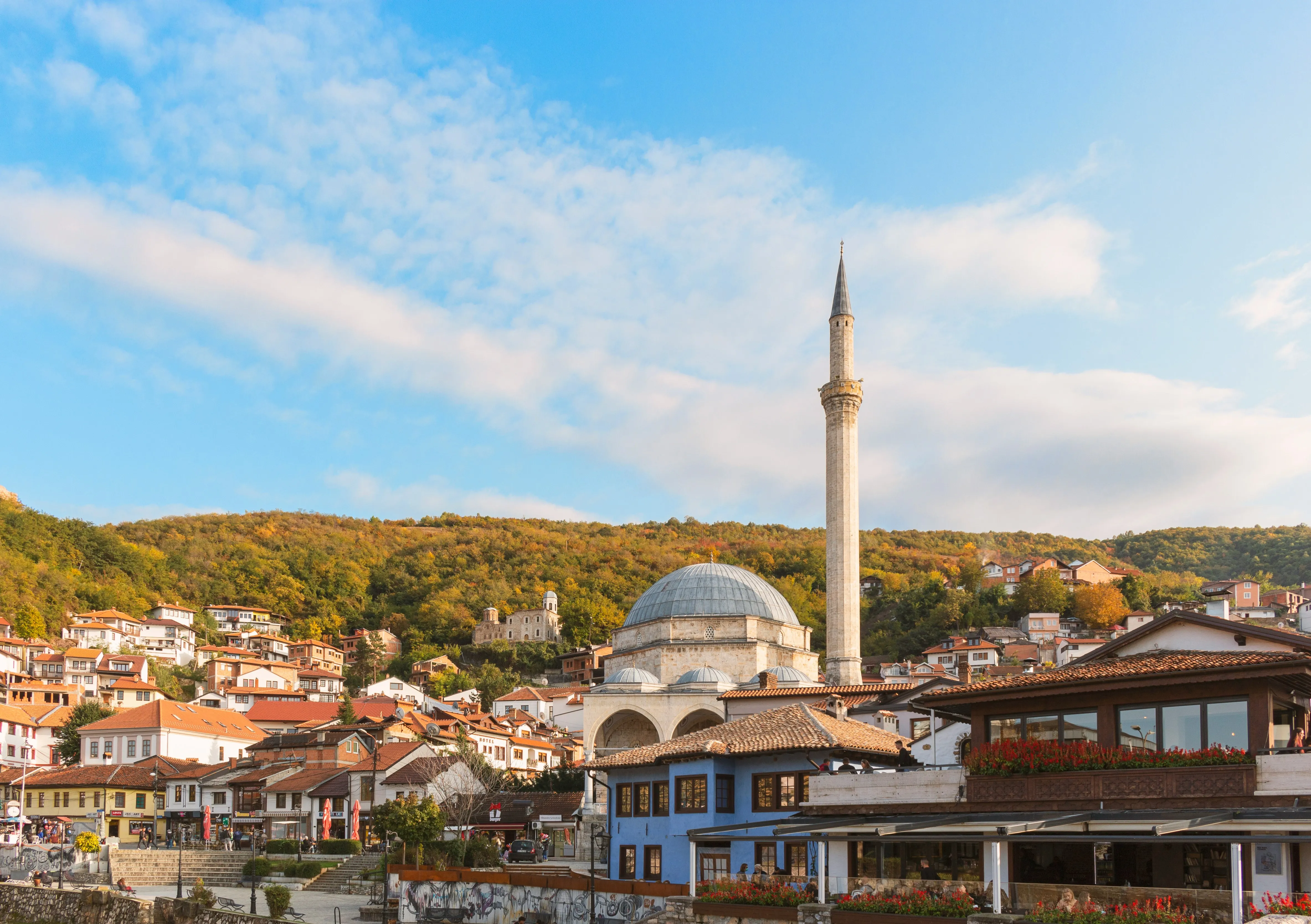
To the south lies Prizren, unanimously considered the cultural and historical capital of the country. This city captivates with its well-preserved Ottoman architecture, with its cobbled streets and the emblematic Stone Bridge crossing the Lumbardhi River. The city’s skyline is dominated by the Sinan Pasha Mosque and, at the top of the hill, by the Prizren Fortress. Climbing to this castle at sunset allows you to enjoy a complete panorama of the city’s red roofs and domes. Prizren is also famous for its festive atmosphere, hosting international events that fill its squares and cultural centers with life throughout the year.
In the western area, the city of Peja serves as the gateway to one of the most spectacular natural regions in the Balkans. The Rugova Canyon, with its impressive cliffs and caves, is a reference destination for those seeking outdoor activities such as hiking, mountain biking, or simply enjoying the serenity of the surroundings. Near the city is the Patriarchate of Peja, a group of medieval churches with exceptional frescoes declared a World Heritage Site. This mix of wild nature and historical spirituality makes the region a place of unique contrasts where the tranquility of the mountains merges with the artistic legacy.
The town of Gjakova stands out for housing the Grand Bazaar, one of the longest and oldest traditional markets in the region, which has been carefully restored. Walking through its wooden galleries allows you to discover local craft workshops and small tea houses that keep the spirit of old times alive. Not far from there, the Visoki Dečani Monastery stands as an architectural gem of great importance. This monastery is notable for its marble structure and its interior walls covered by thousands of original Byzantine frescoes, offering a cultural experience of great historical value in an environment of absolute peace.
For those looking to explore natural diversity, the Sharr Mountains National Park offers high mountain landscapes, glacial lakes, and surprising biodiversity. Towns like Brezovica are known for snow activities during the winter, while in the warmer months, mountain routes allow for the discovery of traditional villages where time seems to have stopped. On the other hand, the city of Mitrovica offers a different perspective on recent history and the coexistence of different communities, with its famous bridge over the Ibar River acting as a visual symbol of the country’s urban complexity.
Finally, religious and archaeological heritage also extends to areas like Gračanica, where its Byzantine monastery is a masterful example of 14th-century architecture. Nearby, the remains of the ancient Roman city of Ulpiana invite visitors to imagine the imperial past of the area through its excavations. These places, distributed throughout the geography, show that the territory offers much more than its urban centers, presenting a constant balance between the bustle of its markets, the solemnity of its temples, and the majesty of its national parks.
Tip: You cannot miss visiting Prizren, the most emblematic place in the country.
✈️ Best time to travel
Kosovo has a continental climate that clearly defines the four seasons of the year, offering different experiences depending on the time of visit. In general terms, the months of late spring and early autumn are considered the most balanced periods to explore the country. During these weeks, temperatures are mild and the natural environment shows its greatest splendor, facilitating both hiking routes through the mountains and walking tours through the historical centers of cities like Prizren or Pristina.
Summer is the season of greatest social and cultural activity, with long sunny days that invite you to enjoy life on terraces and festivals of international relevance. On the contrary, winter transforms the landscape, especially in higher altitude areas, where snow becomes the protagonist and allows for winter sports in a quieter and slower-paced atmosphere than in other European destinations.
| Season | Months | Typical climate | What to expect | Tourist influx |
|---|---|---|---|---|
| Spring | Mar – May | Mild temperatures (10°C - 20°C) and moderate rains. | Green landscapes, blooming in the valleys, and snowmelt in the mountains. | Medium (⭐⭐) |
| Summer | Jun – Aug | Hot and dry, with temperatures that can exceed 30°C. | Film and music festivals, lively atmosphere, and very clear days. | High (⭐⭐⭐⭐) |
| Autumn | Sep – Nov | Gradual drop in temperatures (15°C - 5°C) and cool days. | Autumn colors in the forests, grape harvest time, and agricultural fairs. | Medium (⭐⭐) |
| Winter | Dic – Feb | Intense cold, with frequent frosts and regular snowfalls. | Snowy landscapes, mountain sports, and local winter celebrations. | Low (⭐⭐) |
🗣️ Basic vocabulary
Learning a few words in Albanian, the main language of Kosovo, will help you connect better with the local people and resolve everyday situations more easily. Although the use of English is common in tourist areas and among young people, showing interest in the local language is usually very well received and facilitates communication in shops, markets, or restaurants.
Here is a selection of practical terms and phrases that will be useful during your stay:
- Përshëndetje: Hello.
- Faleminderit: Thank you.
- Ju lutem: Please.
- Po: Yes.
- Jo: No.
- Mirëdita: Good morning.
- Më falni: Excuse me or sorry.
- Sa kushton?: How much does it cost?
- Mirupafshim: Goodbye